

The prototypes area in Andaltec is highly qualified to build components for short series, one-off or few-off automobiles. We are mainly specialized in headlamps, rearlamps or any other lighting devices for the automotive industry.
When and why may you need a prototype?
- When you don’t need too many parts. Because your production is short and serial production technologies make no sense.
When you want to verify that your design and style are good before the construction of production tools (molds, process tools, assembly lines ….). - When you want to correlate optics developments with real parts. Because we can develop optics mock-ups that will reproduce very similar properties than serial production parts.
- When you want to exhibit a style mock-up in a motor show.
- When you need products in a short time and with low cost in comparison with serial production parts.
To explain correctly the activities in prototypes workshop we are going to do it step by step:
The prototype team can define the design of the products with the customer. We transform ideas, sketches or rough designs into products that will be not only manufacturable products in means of prototypes but also in means of serial production.
Once the design is finished, a program for the CNC machines is needed. The best way and tools to reproduce parts by CNC is defined.
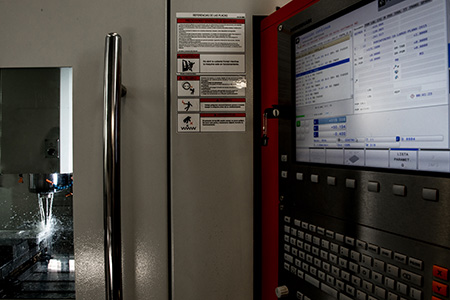
CNC programming screen
In Andaltec there are 2 CNC machines (Computer Numerical Control) that will form a previously designed part by eliminating material from a block.
Our milling machines are optimized for prototyping models and optics products. We can start with blocks made of metals, plastics or resins. Finally, you get the part that you need and now it can be used it in 2 different ways:
- As a final part to be assembled in a product.
- As a master for a silicone mold. The machined part will be used as a reference to obtain replicas with Polyurethane casting.
Our CNC centre has high precision for optical prototypes, we can use a 0.05 mm minimum radius of milling. We can build light guides with optical quality made of PMMA.
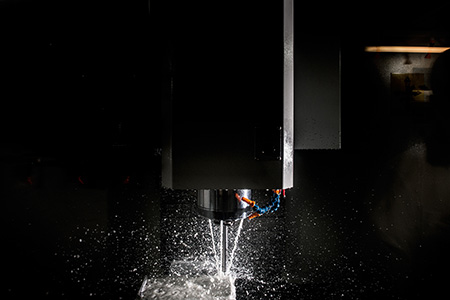
CNC machine at Andaltec during milling process
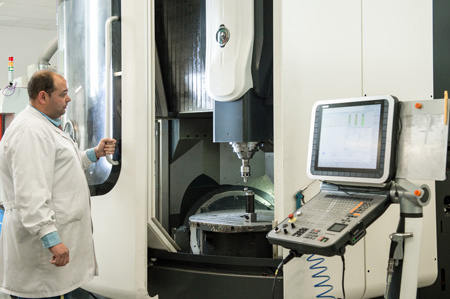
5 Axis CNC milling machine at Andaltec
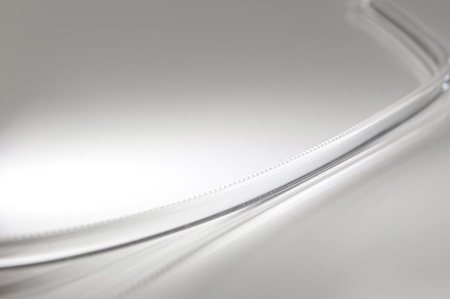
Light guide machined at Andaltec
There are several 3D printing machines in Andaltec. The printing technologies (Multijet, SLS, SHS, FDM…) are different to cover different possibilities and materials.
The parts obtained by 3D printing can be used in two different ways:
- As final parts to be assembled in a product. It is important to define the printing technology and the raw material to ensure the correct mechanical, thermal and chemical behaviour of the part.
- As a master for a silicone mold. The printed part will have the tolerance needed to be used as a reference to obtain replicas with Polyurethane casting.
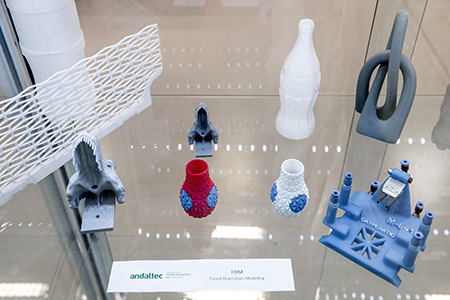
Samples of 3D printing parts
There is a huge variety of Polyurethane references that will allow us to build nearly everything with silicone molds. Polyurethane materials give us a wide range of options:
- Hardness.
- Colours.
- Flexibility.
- Thermal resistance.
- Optical properties. Clear and diffusive materials (here you can see more details about diffusive materials). LINK AL OUTSTANDING – Diffusive materials
2K, 3K, 4K … parts can be built. We can obtain a unique part made of 2, 3, 4 …. different materials by casting them in different steps. So, we can mix opaque and clear materials, hard and soft, diffusive, colours and so on.
The silicone molds will reproduce very precisely the external surfaces of the master (as an example, a fingerprint in a master will be reproduced in a casted part).
The masters that can be used to build the mold can come from 3 different ways:
- Part machined in CNC center.
- One 3D printed part.
- A part or product that comes from the customer.
One silicone mold cannot give us more than 20 parts. When you reach this quantity the mold starts to become degraded. When the part is small it makes sense to use more than one master and so to build a mold with more than one cavity.
We can build big silicone molds. The limitations in dimensions are 1.800 mm width and 1.000 mm height.
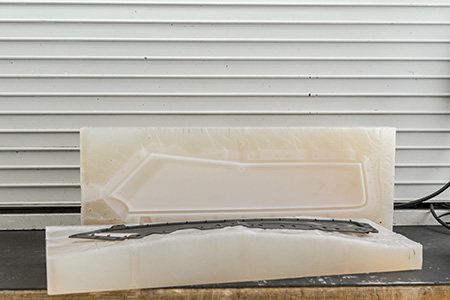
Silicone mold
Andaltec possesses outstanding expertise in the treatment on the surfaces for prototype parts. The finishing of the surface of the parts is very important to achieve exceptional results in optics prototypes and for aesthetic parts.
The treatment on the surface of the parts are usually required when you need to modify their surface. This could happen before the construction of silicone molds by the application of treatment on the master or in parts that come from the casting of the silicone molds.
These are some of the finishing process that can be develop in Andaltec:
- Paintings and coatings
- Varnishing
- High gloss finish
- Satin
- Matt
- Texturing
- Monolayer
- Double Layer
- Metallization: high vacuum metallized parts or metallic paint blasting
- Polishing
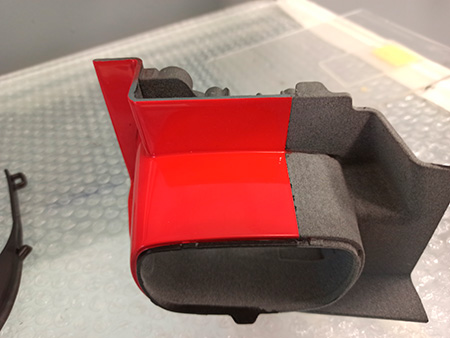
Painted part
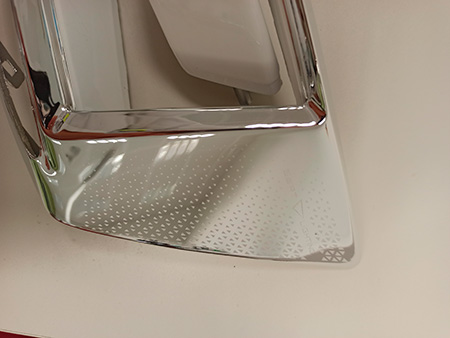
Metallized part
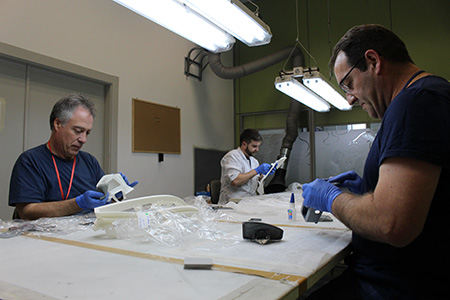
Polishing team at Andaltec
Our prototypes team is highly expertise in the assembly of products taking into account the importance of the tolerances in the automotive sector. Quality and thoroughness are essential requirements in our work. We are mainly specialized in lighting and signalling products.
In summary, the different phases and processes in the prototype area can be seen in this scheme.
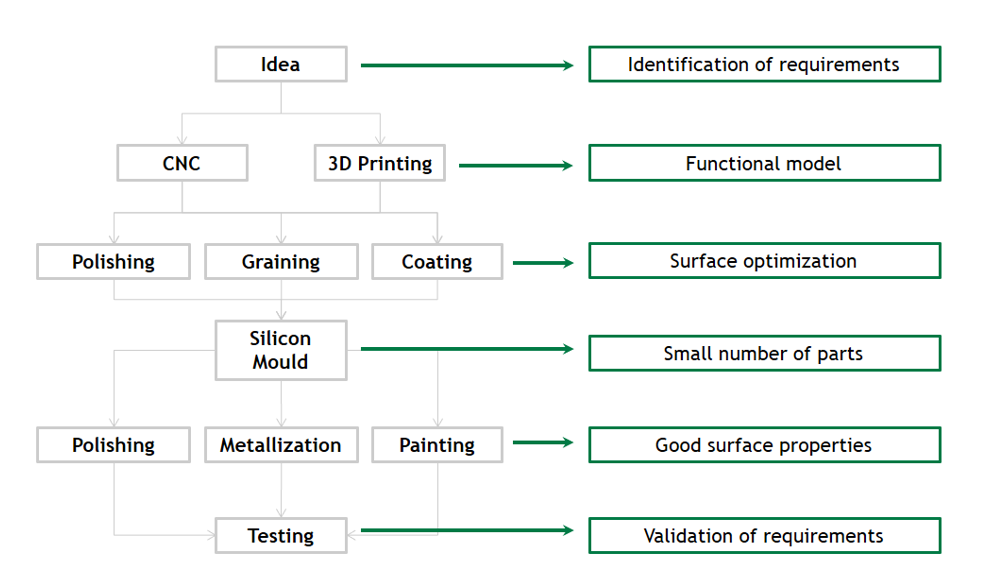
Phases and processes in the prototype area
